Daylight, lamps and sound
Light and Quiet
Two things decide whether a room is pleasant to work in for a whole day: how the light falls and how the room sounds.
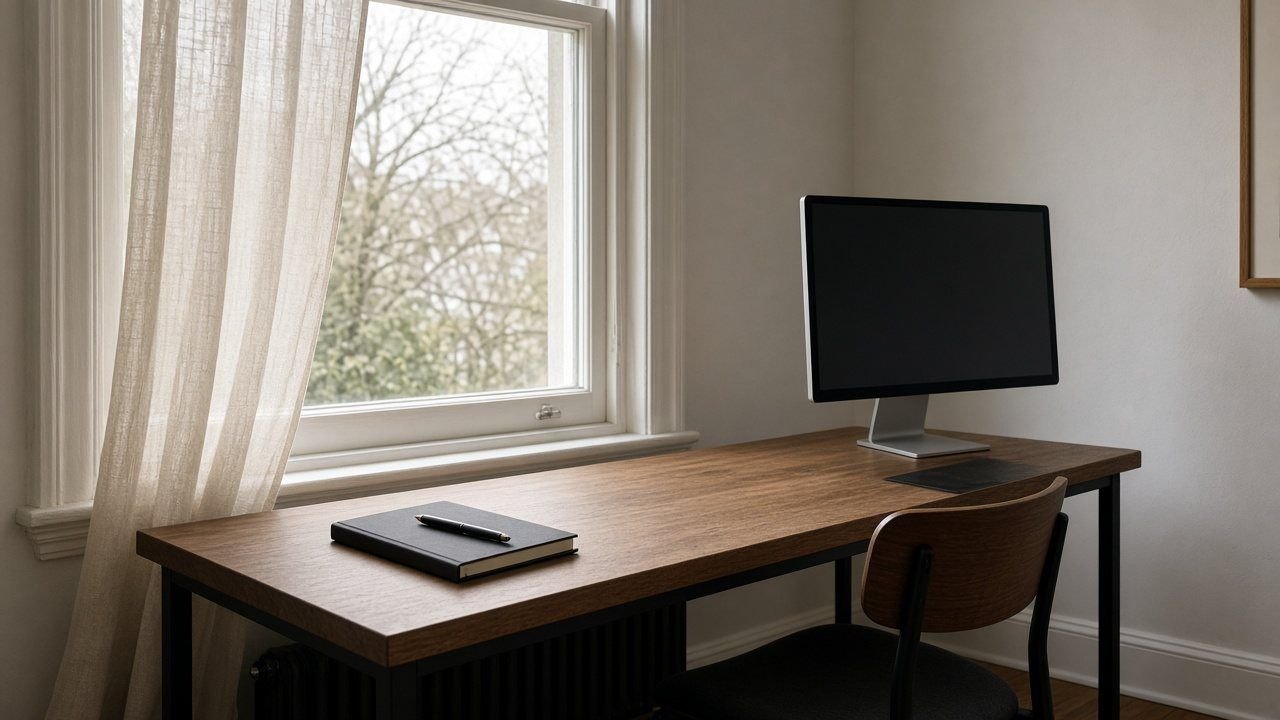
Window light
Place the desk so the window is to one side. Facing the glass makes the screen look dim against a bright sky; sitting with your back to it throws reflections onto the screen. A sheer curtain or a blind evens out the brightest hours.
Lamps
An adjustable desk lamp lights the paper without lighting the screen. Warmer bulbs feel calmer in the evening; brighter, cooler light can help on grey winter mornings. Keep some general light in the room too, so the desk is not a bright island in a dark space.
Glare
If you see a lamp or window reflected in the screen, tilt the screen slightly, move the lamp, or draw the curtain a little.
Echo
Hard floors and bare walls make a room ring, which is tiring on calls. Rugs, curtains, upholstered chairs, full bookcases and pinboards all soak up sound. Felt panels help in very bare rooms.
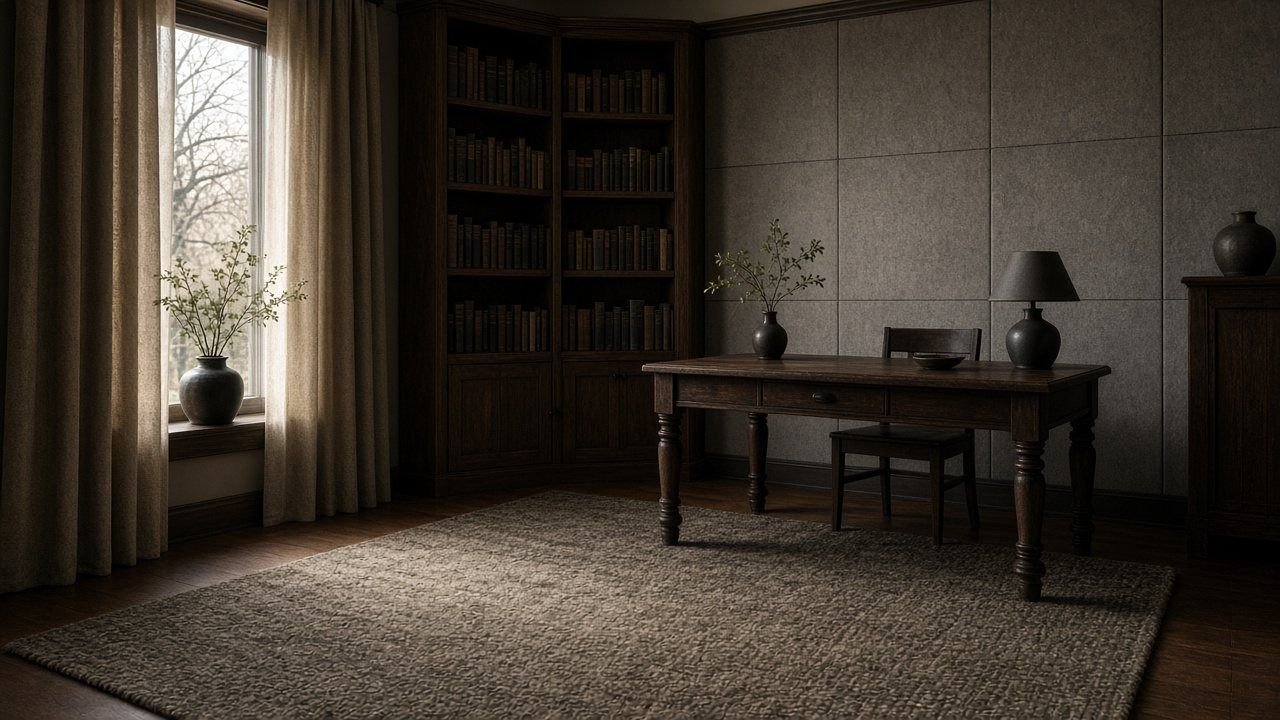
Noise from elsewhere
A door that closes, a draught excluder at the bottom of it and a desk away from the shared wall make more difference than you might expect. A small fan or a radio on low in the next room can mask chatter.
Air and warmth
Open the window for a few minutes now and then, keep the room comfortably warm, and keep heaters well away from paper and cables.